
Online Reading Profile Test: Optimise Your Digital Focus and Speed in 2026
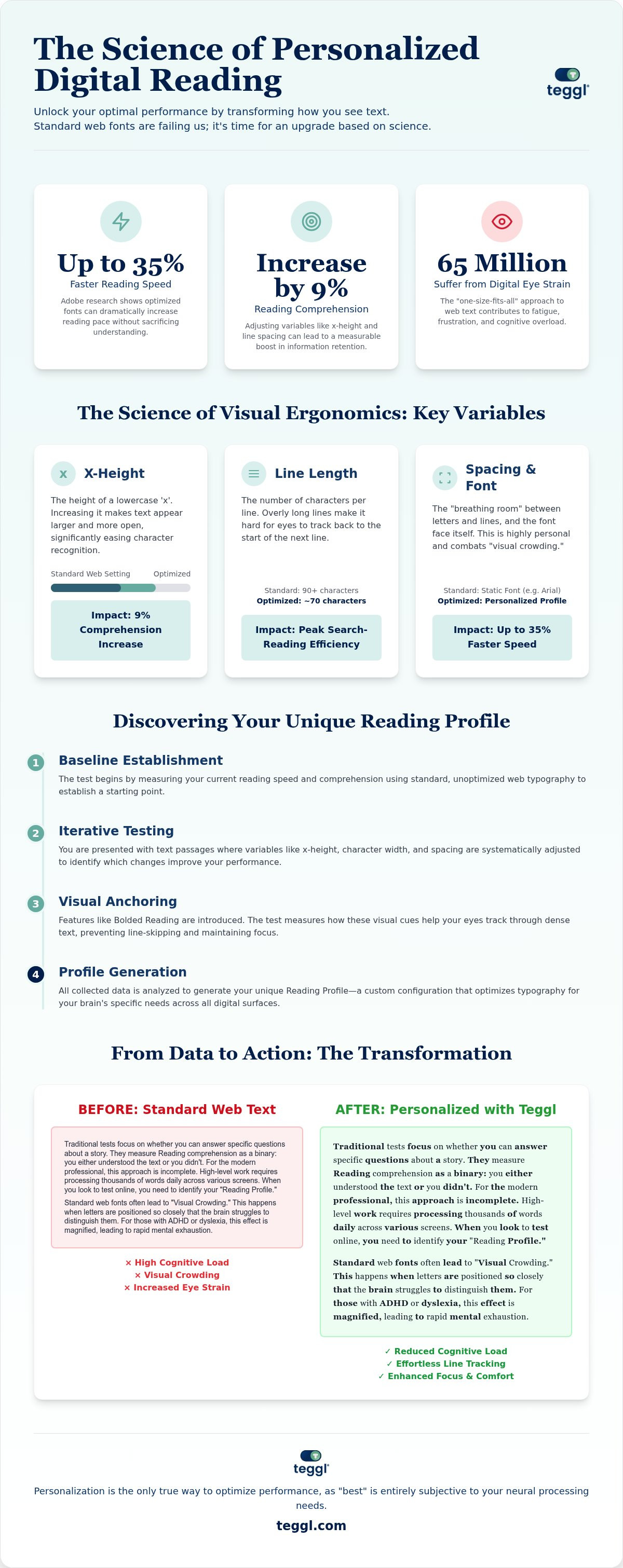
Research from Adobe shows that individuals can read up to 35% faster when they use fonts optimized for their specific eyes. We've all been there: your eyes wander, you lose your place in a long paragraph, and the screen glare starts to feel like a physical weight. With 65 million people reporting symptoms of digital eye strain, it's clear that the standard "one-size-fits-all" approach to web text is failing us. When you decide to leesbegrip testen online, you're taking the first step toward a customized reading environment that reduces fatigue and boosts information processing.
You don't have to settle for cognitive overload or the frustration of re-reading the same sentence three times. We'll show you how a personalized reading profile test uses the latest typographic science to optimize your digital focus and speed for 2026. This isn't about finding a single "best" font, but about discovering the specific settings that work for your brain. We'll explore how adjusting variables like x-height and line spacing can raise comprehension by 9% and transform your browser into a high-performance workspace.
Table of Contents
Beyond Comprehension: Why Traditional Reading Tests Miss the Mark for Professionals
Traditional tests focus on whether you can answer specific questions about a story. They measure Reading comprehension as a binary: you either understood the text or you didn't. For the modern professional, this approach is incomplete. High-level work requires processing thousands of words daily across various screens. When you look to leesbegrip testen online, you shouldn't just be looking for a pass/fail grade. You need to identify your "Reading Profile." This is a unique set of typographical preferences, including font size, spacing, and x-height, that maximizes your cognitive efficiency.
Standard web fonts often lead to "Visual Crowding." This happens when letters are positioned so closely that the brain struggles to distinguish them. For those with ADHD or dyslexia, this effect is magnified, leading to rapid mental exhaustion. Taking the time to leesbegrip testen online through a visual ergonomics lens reveals why you might feel drained after just an hour of research. Adaptive typography solves this by adjusting the digital environment to the reader, rather than forcing the reader to struggle with static, unoptimized text.
The Science of Personalised Readability
Research from Adobe indicates that personalized fonts can increase reading speed by up to 35% without any loss in understanding. There's no such thing as a "perfect" font. While a classic serif like Garamond might work well for some, others might find a clean sans-serif like Montserrat easier to track. Your optimal settings depend on your age, visual acuity, and even the quality of your screen. Personalization is the only true way to optimize performance, as "best" is entirely subjective to your neural processing needs.
Cognitive Load and Digital Reading
The primary goal of optimizing your profile is to cognitieve belasting verminderen lezen. When typography is poor, your brain spends excessive energy on the mechanical task of decoding characters. This leaves less mental bandwidth for actual analysis and decision-making. By reducing this strain, you don't just read faster; you preserve your energy for the entire workday. Long-term, this reduction in cognitive friction leads to better focus and a significant decrease in the physical fatigue often associated with screen-heavy roles.
The Mechanics of the Online Reading Profile Test: Measuring Visual Ergonomics
Understanding your reading ability requires more than a simple quiz. When you choose to leesbegrip testen online, the process follows a structured path to decode your visual needs. It's about measuring how your eyes and brain interact with digital pixels in real-time. By using a scientific tool to leesbegrip testen online, you move from guesswork to precision, identifying exactly where your focus breaks down.
The test operates through four distinct phases:
Baseline: Establishing a starting point for speed and comprehension using standard web typography.
Iteration: Testing specific variables like x-height, character width, and inter-line spacing to see which adjustments improve performance.
Anchoring: Introducing Bolded Reading anchors to measure how visual cues help with line-tracking and focus.
Profile: Analyzing the collected data to generate a custom configuration for all your digital surfaces.
Typographic Variables That Impact Your Speed
Small changes in text layout create significant differences in how we process information. While some users thrive with tight character spacing, others require more "breathing room" to prevent letters from blurring together. The following table illustrates how specific typographic adjustments, backed by university research, directly influence your reading metrics.
It's vital to recognize that peer-reviewed studies often show specialized fonts like Dyslexie don't offer a speed advantage over standard fonts like Arial. True optimization comes from personalizing the space between and within the letters rather than just changing the font face. Leeds research highlights that a 70-character line length is the sweet spot for search-reading efficiency, preventing the "long-line fatigue" common on wide-screen monitors.
Assessing Digital Performance for Adults
A professional leessnelheid testen online must look beyond words-per-minute. It evaluates eye-movement tracking and the reduction of visual stress. The test identifies the optimal bolding intensity for your specific focus needs, creating a visual anchor that prevents your eyes from skipping lines. This data-driven approach ensures your digital environment is built for your specific cognitive profile. If you're curious about your own metrics, you can discover your optimal reading settings through a personalized test.
From Data to Action: Personalising Your Digital Environment with Teggl
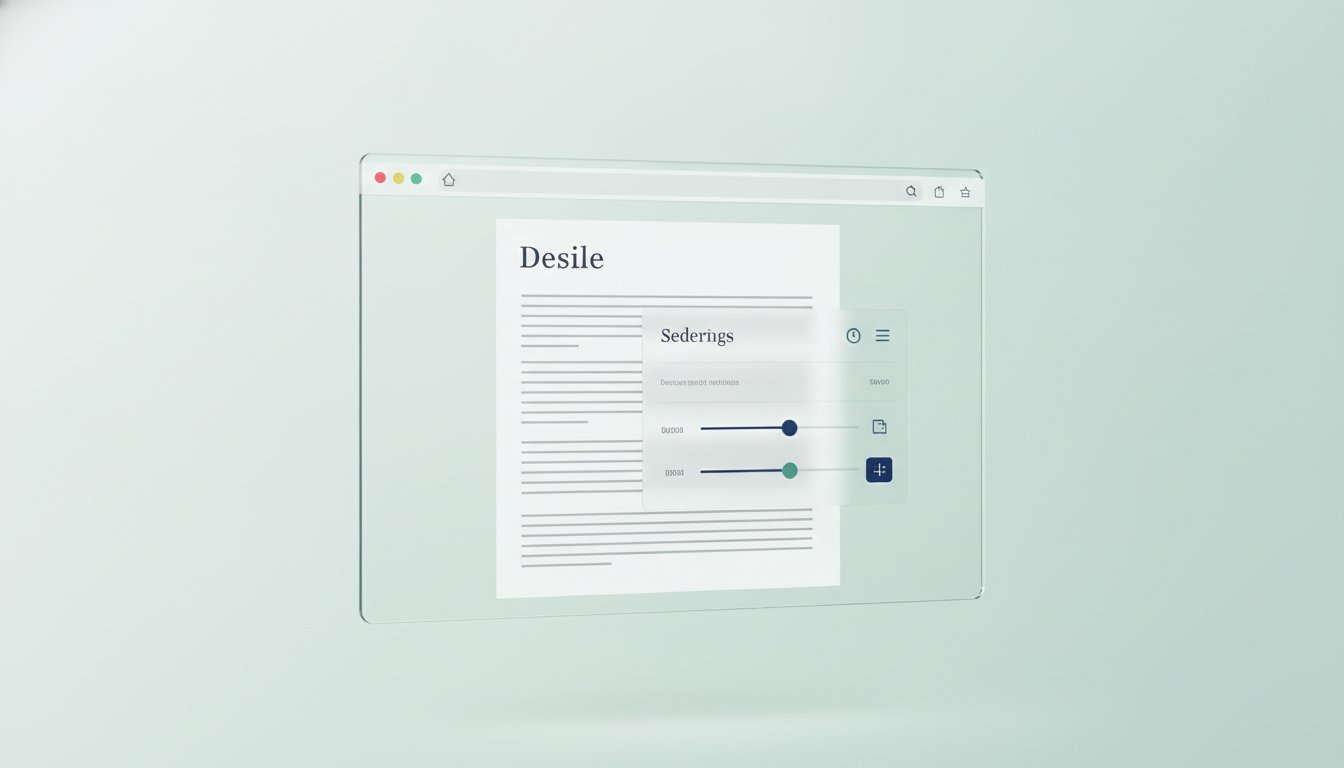
Once you've used a tool to leesbegrip testen online, the results shouldn't sit in a static report. The Teggl Browser Extension acts as the bridge between raw data and your daily workflow. It adjusts the typography of every website you visit in real-time to match your verified profile. This eliminates the need for manual browser zoom hacks that often break a site's layout, providing a consistent experience across different platforms and content types.
A cornerstone of this implementation is the bolded reading modus. By emphasizing the initial characters of words, it provides a stable fixation point that guides your eye movements more efficiently. This is particularly valuable for maintaining focus during the late-afternoon hours when cognitive resources are naturally depleted. Teggl is built on W3C accessibility standards, ensuring that these enhancements remain inclusive. We don't frame this as a "cure" for neurodivergence; instead, we treat it as an essential interface layer that makes the web responsive to human biology.
Practical Tips for Digital Reading Wellness
While adaptive typography handles the mechanical side of reading, your environment still plays a major role in sustained focus. Use these actionable strategies to complement your personalized profile:
Balance Ambient Light: Ensure your screen brightness matches the light in your room to reduce pupil dilation stress.
Utilize the "Reading Ruler": For dense spreadsheets or technical documentation, use Teggl's digital overlay to isolate one line at a time and prevent vertical tracking errors.
Optimize Contrast: If you experience "halo" effects around white text, switch to a high-quality dark mode or a sepia background to soften the visual impact.
Batch High-Load Reading: Schedule your most text-heavy research for your peak alertness periods, using your personalized profile to maintain that momentum longer.
The Future of Personalized Reading
In 2026, we're moving toward a model of "intelligent, responsive content." The next phase of adaptive typography involves AI-driven systems that can detect reader fatigue in real-time and subtly increase line spacing or bolding intensity as your focus dips. This shift turns reading from a passive struggle into a dynamic, supported experience. The first step is simply to leesbegrip testen online and establish your baseline. By taking control of your digital surfaces, you ensure that technology finally bends to meet your needs, rather than the other way around.
Take Control of Your Digital Performance
Digital overload shouldn't be your daily reality. We've explored how shifting your focus from basic comprehension to visual ergonomics can fundamentally change how you process information. By identifying your unique reading profile, you're doing more than just skimming pages; you're actively protecting your mental energy. When you take the time to leesbegrip testen online, you gain access to a customized digital environment designed specifically for your eyes.
The science supports this transformation. Peer-reviewed studies from Adobe and the University of Leeds demonstrate that personally optimal fonts can increase reading speed by up to 35% while significantly reducing cognitive fatigue. You don't have to settle for the frustration of line-skipping or the exhaustion of dense paragraphs. Adaptive typography is the future of productivity, turning every website into a clear, focused space that respects your visual needs.
Discover your optimal reading settings with the Teggl Reading Profile Test.
Your mind is your most valuable asset. Give it the clarity and comfort it needs to perform at its peak. Start your journey toward effortless digital reading today and feel the difference that personalized typography makes.
Frequently Asked Questions
Can a personalised font really improve my reading speed?
Personalized fonts can increase reading speed by up to 35% when they align with your unique visual needs. Research from Adobe shows that there isn't a universal font that works for everyone. Performance peaks when variables like x-height and character spacing are tailored to the individual. When you choose to leesbegrip testen online, you identify these specific settings to reduce the cognitive effort required to process digital text.
Is the Teggl Reading Profile Test a medical diagnosis for dyslexia or ADHD?
The Teggl Reading Profile Test is not a medical diagnosis for conditions like dyslexia or ADHD. It is a visual ergonomics assessment designed to optimize your digital reading environment. While it helps users with various neurodivergent traits manage digital eye strain and focus, it doesn't replace a clinical evaluation. We provide adaptive technology that improves performance rather than offering a medical cure.
How long does it take to see results from using a personalised reading profile?
You'll notice an immediate reduction in digital eye strain and visual crowding as soon as you apply your profile settings. While the physical relief is instant, your maximum reading speed usually peaks after a short period of consistent use as your brain adjusts to the new visual anchors. Many professionals find that when they leesbegrip testen online and apply the results, their workday fatigue decreases significantly within the first few days.
Does the online reading profile test work on mobile devices or just browsers?
The Teggl Reading Profile Test and extension are designed for desktop browsers, including Chrome, Microsoft Edge, Firefox, and Brave. This platform-specific approach ensures the highest level of control over complex typographic variables like line length and bolding intensity. While the test provides a data-driven baseline for your preferences, the current technology is built to transform your web browsing experience on computers rather than through a mobile application.
Comments